




Simple Daily Adjustments to Support Lower Body Circulation and Energy
Many adults notice a sense of fullness, tired legs, or sluggishness after a long workday. Whether sitting at a office desk for hours or standing on hard floors during a long shift, lower body circulation faces the constant downward pull of gravity. Making small, intentional adjustments to daily habits can provide gentle encouragement for blood flow and support overall physical vitality.
The Physical Demand of Prolonged Sitting and Standing
When remaining stationary for extended periods, the lower extremities experience steady pressure. Sitting can compress blood vessels near the hips and thighs, while standing puts continuous demand on the blood vessels in the lower legs. Over time, this inactivity can cause fluid and blood to accumulate in the feet and ankles, leading to occasional discomfort.
Understanding How Blood Returns to the Heart
While arteries carry oxygen-rich blood away from the heart, veins must move blood upward against gravity. The veins in the legs rely heavily on the contraction of surrounding calf muscles. When walking or flexing the feet, these muscles contract and act like a natural pump, helping propel blood upward. When stationary, this muscular pump remains idle, which can slow down fluid transport.
Movement Micro-Breaks for Daily Comfort
Integrating short movement intervals throughout the day is a practical step toward supporting lower body flow. Taking a two-minute break every forty-five minutes to walk, perform standing calf raises, or execute simple ankle circles encourages the calf muscles to engage. For those who remain seated during long phone calls, flexed foot taps and seated marching can keep blood moving without leaving your chair.
The Role of Targeted Bioflavonoid Support
Dietary choices can also offer valuable nourishment for blood vessel integrity. Plant-derived compounds known as bioflavonoids, naturally found in citrus rinds, have been researched for their ability to support vascular tone and encourage steady circulation.
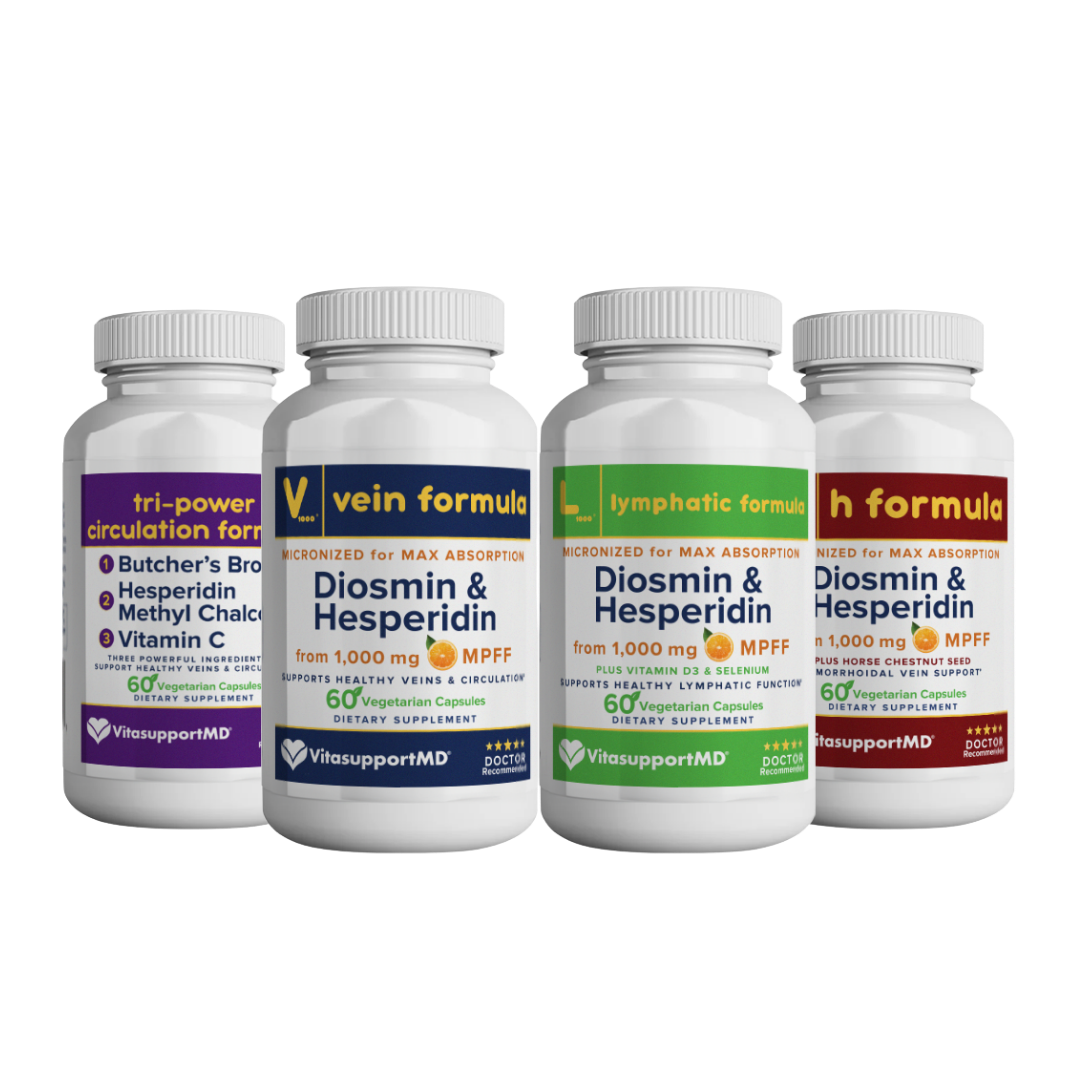
For individuals seeking robust daily support, VitasupportMD's Vein Formula provides 1000 mg of Micronized Purified Flavonoid Fraction (MPFF), combining diosmin and hesperidin in a high-absorption profile designed to support healthy leg veins. If you prefer starting with a streamlined daily portion, VitasupportMD's Original Vein Formula offers a classic blend of bioflavonoids to maintain vascular wellness over time.
Additionally, combining botanical extracts can provide multi-faceted care. VitasupportMD's Tri-Power Circulation Formula blends Butcher’s Broom, Hesperidin Methyl Chalcone, and Vitamin C to support natural circulation and maintain vessel strength.
Supporting Fluid Balance and Lymphatic Transport
Circulatory support involves more than just blood flow; it also encompasses the transport of lymph fluid, which manages fluid balance in surrounding tissues. Unlike the cardiovascular pathway, lymphatic transport does not rely on a central pump and depends entirely on physical movement and proper hydration.
Dehydration can make fluid thicker, making transport more difficult. Drinking eight to ten glasses of water daily encourages smooth fluid movement. To complement hydration and movement, VitasupportMD's Lymphatic Formula pairs micronized diosmin and hesperidin with Vitamin D3 and Selenium to support healthy lymphatic drainage and maintain tissue lightness.
Caring for Vascular Comfort in Sensitive Areas
Extended sitting exerts steady pressure not only on the calf muscles but also on the pelvic floor and lower rectum. This continuous pressure can affect localized blood vessels, leading to temporary discomfort in hemorrhoidal veins.
Maintaining soft digestion with dietary fiber and proper hydration is a key first step. For targeted nutritional support in this region, VitasupportMD's H Formula combines MPFF with Horse Chestnut Seed Extract. This precise blend helps support healthy hemorrhoidal veins and maintain structural strength in delicate capillaries.
Practical Lifestyle Habits for Long-Term Vitality
Building a sustainable routine relies on small, manageable adjustments practiced consistently:
-
Elevate Your Legs: Spending fifteen minutes with your legs elevated above heart level at the end of the day allows gravity to assist with fluid drainage.
-
Choose Compression: Graduated compression garments apply gentle pressure that is firmest at the ankle, helping guide fluid upward during travel or long desk sessions.
-
Mind Your Posture: Avoid crossing your legs at the knees or ankles to prevent compressing blood vessels behind the knees.
Frequently Asked Questions
1. How does prolonged sitting affect leg circulation?
Sitting keeps the calf muscles stationary, reducing the muscular pumping action needed to return blood to the heart. This can cause fluid to accumulate in the lower extremities, leading to a tired or heavy feeling.
2. Why is hydration important for blood flow?
Adequate water intake helps maintain normal blood volume and fluid consistency. Dehydration can cause blood to become thicker, making it more difficult for blood vessels to transport fluid efficiently upward from the legs.
3. What are citrus bioflavonoids, and how do they support health?
Citrus bioflavonoids, such as diosmin and hesperidin, are plant-based compounds derived from citrus rinds. They have been studied for their ability to support blood vessel integrity, encourage vascular tone, and maintain healthy circulation.
4. How often should I take movement breaks during the workday?
Taking a brief movement break every 30 to 45 minutes is recommended. Even two minutes of walking, calf raises, or gentle stretching can activate lower leg muscles and support healthy blood movement.
5. Can compression garments be worn daily?
Yes, graduated compression socks are designed for daily use during work, travel, or prolonged standing. They provide gentle external pressure that assists veins in guiding fluid upward toward the heart.


