




Ankle Wellness: Factors that Influence Fluid Balance and Natural Ways to Support Drainage
Many individuals notice that by the end of a long day, their lower legs and ankles may benefit from extra support. This common experience can make people more aware of their circulation and daily wellness habits. While changes in how the lower legs feel may be more noticeable after extended periods of sitting or standing, understanding how fluid moves through the lower extremities is the first step toward supporting daily wellness. By looking closely at how fluid moves through the legs, you can make informed lifestyle choices that support normal drainage and promote long-term well-being.
Understanding the Factors Behind Lower Leg Fluid Balance
Fluid management in the lower extremities is a continuous process that relies on a network of vessels to move blood and lymph back toward the heart. Because of gravity, the veins and lymphatic vessels in the lower legs must work extra hard to help move fluid upward. When physical movement is limited, this process may benefit from added daily support.
Prolonged Inactivity and Sedentary Habits
Modern routines often involve spending consecutive hours seated at a desk, looking at screens, or standing in one position for long shifts. When the legs remain still, the calf muscles are not contracting to assist with fluid return. This lack of movement can make lower-body circulation and fluid balance an important focus for daily wellness. Additionally, sitting for long durations can place extra pressure on the thighs and hips, which may affect the efficient upward movement of fluid through the lower body.
Changes Related to Age and Environment
As time goes on, the elasticity of blood vessels naturally shifts, which can make it more important to support healthy fluid balance. Environmental aspects, such as high summer temperatures, can also affect how the lower body responds to daily activity. Keeping a comfortable environment and adjusting daily habits can support overall wellness during these seasonal transitions.
Practical and Supportive Ways to Encourage Fluid Movement
Supporting natural drainage does not require a complex or restrictive routine. Instead, incorporating small, consistent habits throughout your day can support fluid balance and enhance your lower-leg wellness routine.
Mindful Movement and Seated Exercises
Regular physical activity is an excellent way to support blood flow and fluid movement. When leaving your workspace is not an option, simple movements performed right at your desk can encourage the calf muscles to act as a natural pump.
Ankle circles: Lifting one foot off the floor and slowly rotating the ankle for 10 to 15 seconds in each direction helps support local circulation in the lower legs and feet.
Calf raises: Performing calf raises by alternately lifting the heels while keeping the toes on the floor engages the lower leg muscles, supporting the upward return of fluid.
Seated marching: Alternately lifting the knees toward the chest while maintaining proper upright posture activates the thigh and hip muscles, supporting fluid movement after long periods of inactivity.
Compression and Elevation Strategies
External support options can be useful for lower-leg wellness. Wearing graduated compression garments applies a gentle, structured pressure that decreases from the ankle upward, which helps support healthy circulation. Modern compression socks utilize soft, breathable materials that fit seamlessly into a daily wardrobe, offering steady support during long travel days or extended hours at a desk.
Pairing compression wear with leg elevation at the end of the day allows gravity to work in your favor. Elevating the legs on a few pillows for 15 to 20 minutes supports easy drainage and overall leg wellness.
Nutritional Choices for Fluid Balance
The foods you choose at the table play a major role in how fluid is maintained within your tissues. Diets that contain excessive sodium may affect normal fluid balance. Choosing whole, nutrient-dense options can support standard fluid equilibrium.
Potassium-rich options: Foods like avocados, bananas, and leafy greens help support fluid balance naturally.
Antioxidant-rich choices: Berries, citrus fruits, and nuts offer antioxidants that support vascular walls and promote healthy circulation.
Hydration habits: Staying consistently hydrated with water throughout the day supports normal blood viscosity and helps fluid move efficiently through the body.
Targeted Flavonoid Support for Leg Health
In addition to lifestyle adjustments, many individuals choose to include targeted dietary supplements in their daily routine to support healthy leg veins and encourage normal circulation. Citrus-derived compounds known as bioflavonoids have been widely researched for their ability to support vascular tone and maintain healthy fluid balance in the lower extremities.
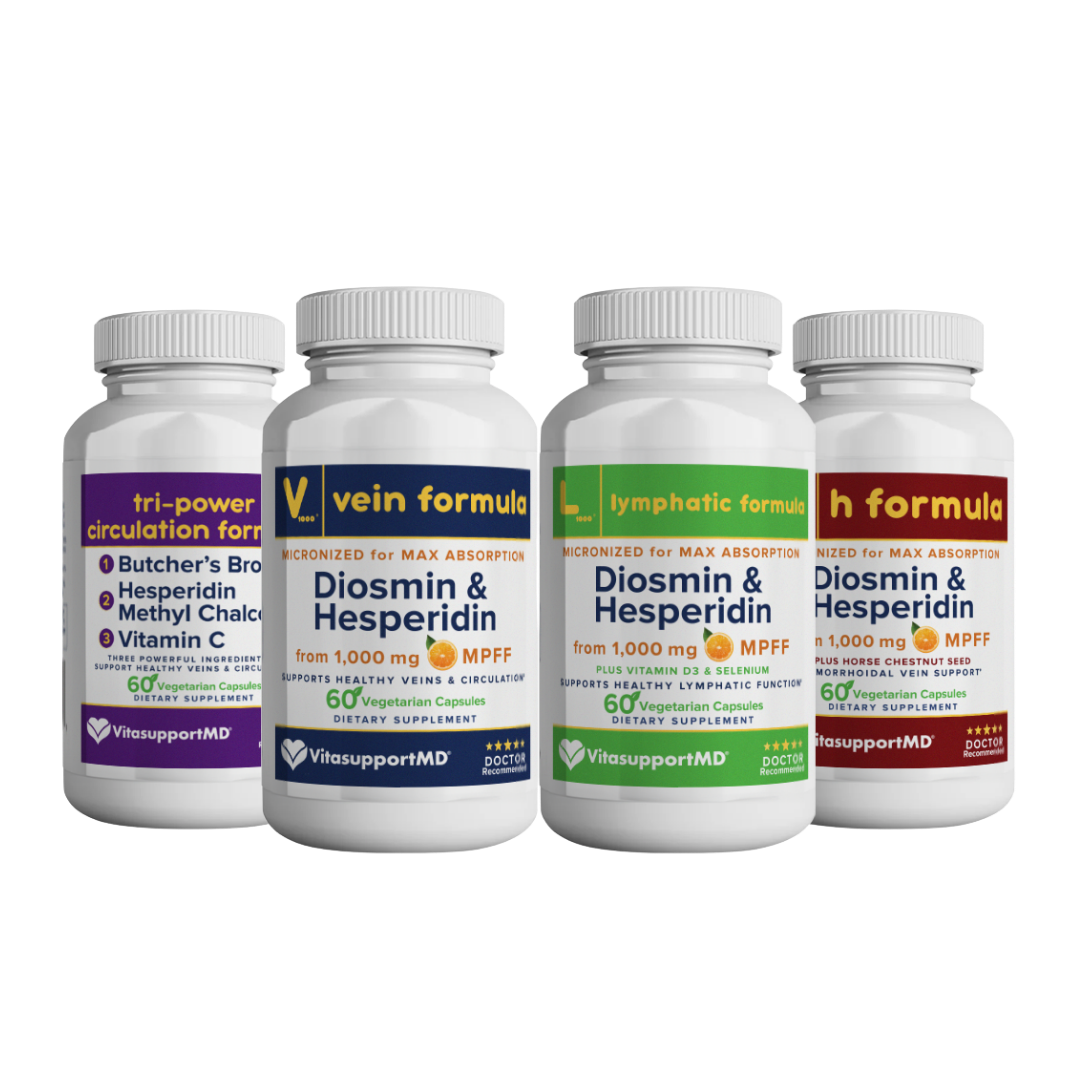
When looking for concentrated support, you should consider VitasupportMD’s Vein Formula, which provides 1000 mg of Micronized Purified Flavonoid Fraction, or MPFF, per serving. This premium micronized flavonoid blend contains 900 mg of Diosmin and 100 mg of Hesperidin per serving, working synergistically to support healthy circulation and maintain vein integrity in the lower limbs.
Supporting the Lymphatic Pathways
Because lower-leg fluid balance involves both the veins and the lymphatic network, supporting lymphatic function can provide a more comprehensive approach to leg wellness. The lymphatic system operates without a central pump, meaning it relies heavily on external movement, deep breathing, and targeted nutrition to maintain steady fluid transport.
To provide focused support for this pathway, VitasupportMD’s Lymphatic Formula combines the standard 1000 mg MPFF bioflavonoid blend per serving with Vitamin D3 and Selenium. This specific formulation is crafted to support a healthy lymphatic system and encourage normal lymphatic drainage.
Conclusion
Supporting healthy fluid balance in the ankles and lower legs is a journey that centers on consistency and a gentle gesture of care toward your body. By combining regular movement breaks, proper hydration, compression strategies, and high-quality, doctor-formulated supplements, you can create a supportive daily routine that helps your lower legs stay ready for the day.
Frequently Asked Questions
How does sitting for long periods affect fluid balance in the ankles?
When you sit for extended durations without moving, your lower leg muscles remain relaxed. These muscles normally contract during walking to help move fluid back up toward the heart against the pull of gravity. Regular movement helps support healthy circulation and fluid balance in the lower body.
Can staying hydrated help support normal fluid drainage?
Yes, proper hydration is essential for fluid balance. Adequate water intake helps fluid move smoothly through the blood and lymphatic vessels, supporting natural drainage and overall circulatory wellness.
What is MPFF and how does it support leg wellness?
Micronized Purified Flavonoid Fraction, or MPFF, is a blend of micronized bioflavonoids derived from citrus fruit, primarily consisting of Diosmin and Hesperidin. The micronization process greatly reduces the particle size of the ingredients, making them more easily absorbable into your bloodstream as to increase bioavailability and effectiveness. These bioflavonoids support vascular tone, help maintain healthy leg veins, and encourage normal fluid balance.
How often should I elevate my legs to encourage drainage?
Elevating your legs above the level of your heart for 15 to 20 minutes, two or three times a day, can be a supportive addition to a leg wellness routine. This practice utilizes gravity to help support normal fluid movement through the lower body, especially after a long day of sitting or standing.


