




Most of us know that stretching is good for us, yet it is often the first thing we skip. A few minutes spent loosening the muscles in your calves, thighs, and hips can make everyday movements feel easier, from climbing stairs to getting in and out of the car. Stretching also keeps the leg muscles active, and active muscles play an important part in moving blood back toward the heart. This guide walks you through a simple routine you can do at home, with options for doing most of it from a sturdy chair.
Why Leg Flexibility Matters More With Age
As the years pass, muscles and tendons naturally lose some of their elasticity. Long hours of sitting can shorten the muscles at the back of the thighs and the front of the hips, while time spent standing in one place keeps the calves working without much variety. The result is often a feeling of stiffness when you first stand up or after a long drive.
Gentle stretching helps maintain the range of motion in your ankles, knees, and hips. Moving these joints through their full range also asks the calf and thigh muscles to contract and relax. Each time your calf muscles tighten, they squeeze the deep veins of the lower leg and help push blood upward. This is often called the calf muscle pump, and keeping it active through regular movement is one of the simplest habits for supporting healthy leg circulation.
Before You Begin: A Few Simple Guidelines
A good stretch should feel like gentle tension, never sharp pain. Move slowly into each position, breathe steadily, and hold for 20 to 30 seconds without bouncing. Repeat each stretch two or three times on each side.
Wear comfortable clothing and supportive shoes, or stretch barefoot on a non-slip surface. Keep a sturdy chair or countertop within reach for balance. If you have had a recent surgery, joint replacement, or any concern about your joints, speak with your physician or a physical therapist before starting a new routine.
Step 1: Ankle Circles and Alphabet Tracing
Sit tall in a chair with both feet flat on the floor. Lift one foot slightly and slowly draw circles with your toes, ten in each direction. Then trace the letters of the alphabet in the air with your big toe. This warms up the ankle joint and gently engages the calf muscles before the deeper stretches. Switch feet and repeat.
Step 2: Seated Hamstring Stretch
Sit near the front edge of your chair. Extend one leg straight out with the heel resting on the floor and toes pointing up. Keep your back long and hinge forward slightly from the hips until you feel a stretch along the back of the thigh. Rest your hands on your bent knee rather than reaching for your toes. Hold, breathe, and switch sides.
Step 3: Standing Calf Stretch
Stand facing a wall or countertop and place both hands on it at shoulder height. Step one foot back, keeping the heel flat on the floor and the toes pointing forward. Bend the front knee until you feel a stretch in the calf of the back leg. For a gentler version, shorten your stance. This stretch is especially helpful after long periods of standing.
Step 4: Supported Quadriceps Stretch
Hold the back of a sturdy chair with one hand. Bend the opposite knee and bring your heel toward your seat, holding your ankle or pant leg with your free hand. Keep your knees close together and stand tall. If reaching your ankle is uncomfortable, loop a towel around your foot and hold the ends instead.
Step 5: Seated Figure-Four Hip Stretch
Sitting upright, cross one ankle over the opposite knee so your legs form the shape of the number four. Keep your back straight and lean forward slightly until you feel a stretch in the outer hip and buttock. This yoga-inspired position is a comfortable way to release tension that builds up after hours of sitting.
Step 6: Heel Raises to Finish
Stand behind a chair, holding the back lightly. Rise slowly onto the balls of your feet, pause, and lower your heels back down. Repeat ten to fifteen times. Heel raises are not a stretch in the traditional sense, but they are an easy way to finish the routine by actively working the calf muscles.
Making the Routine Part of Your Day
Consistency matters more than intensity. Many people find it easiest to attach their stretches to something they already do, such as after the morning coffee, during a television program, or before bed. Even five minutes a day keeps the muscles accustomed to moving. On days when you travel or sit for long stretches, the ankle circles and heel raises can be done almost anywhere.
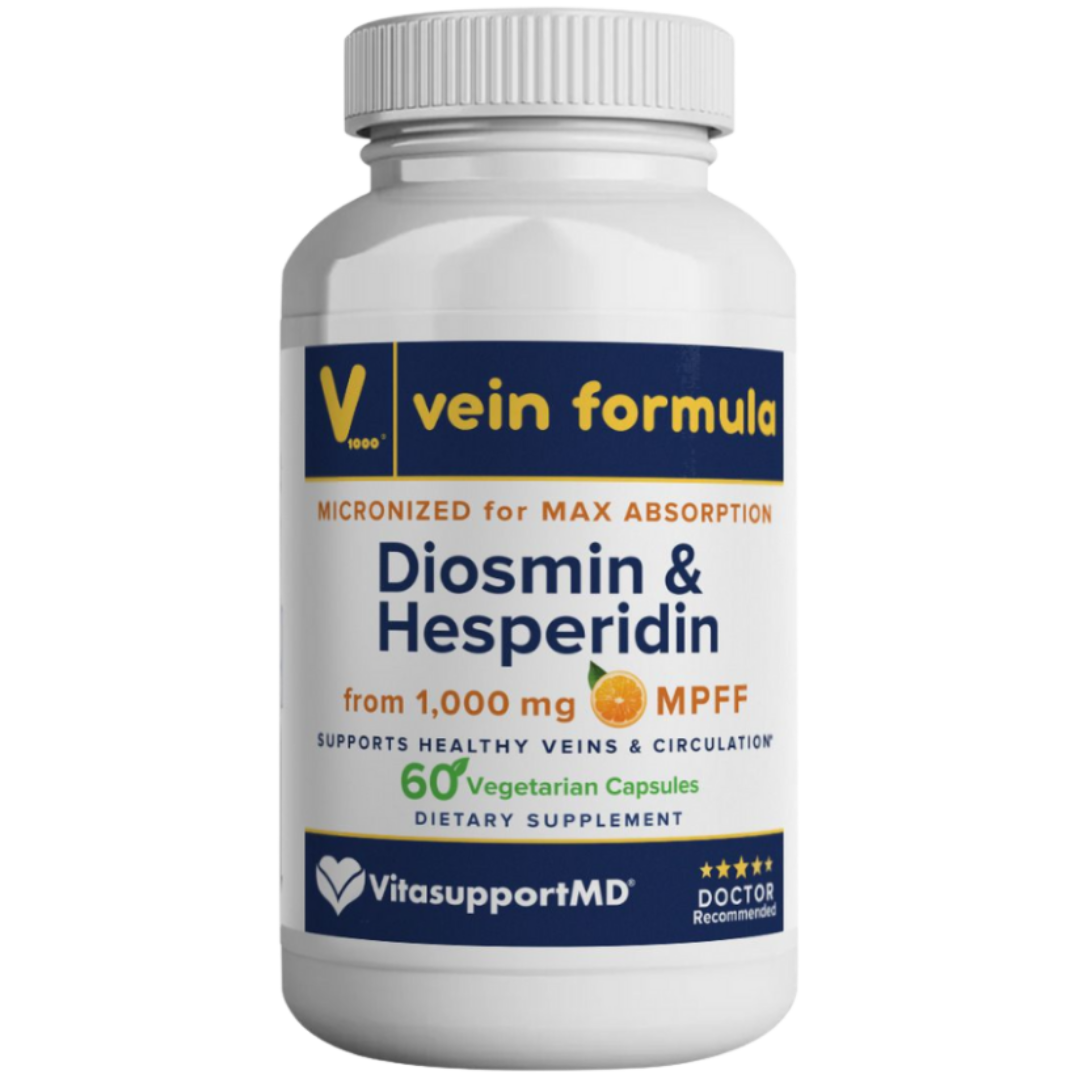
Stretching works best alongside other everyday habits: drinking water steadily through the day, taking short walks, and changing position regularly when you sit or stand for long periods. Nutrition can play a supporting role as well. VitasupportMD Vein Formula provides 1,000 mg of micronized diosmin and hesperidin per two-capsule serving. These citrus bioflavonoids have been studied for decades for their role in supporting healthy vein function and circulation, and the formula was developed by a circulation specialist to complement an active daily routine.
As with any supplement, consult your physician before adding it to your routine.
Frequently Asked Questions
How long should I hold each leg stretch?
Hold each stretch for 20 to 30 seconds while breathing slowly, and repeat it two or three times on each side. Avoid bouncing, which can strain the muscle rather than relax it.
Is it better to stretch in the morning or the evening?
Both work well. Morning stretches can help loosen stiffness after a night's rest, while evening stretches may feel relaxing after a long day. The most important factor is choosing a time you can keep to most days.
Can I do this routine if I have limited balance?
Yes. Most of the stretches can be done seated, and the standing ones use a chair or countertop for support. Move slowly, keep your support within reach, and skip any position that feels unsteady.
How does stretching relate to leg circulation?
Stretching and gentle movement engage the calf and thigh muscles. When these muscles contract, they help push blood in the leg veins back toward the heart, which is why regular movement is often encouraged for supporting healthy leg circulation.
Should I stretch if it feels painful?
No. A stretch should feel like mild tension, not pain. Ease off to a gentler position, and if discomfort continues, speak with your physician or a physical therapist.
es/


